

Damaged stone countertops do not always need to be completely replaced. A heavy object may chip an edge, a line may appear near the sink, or a mark that looks like a stain may suddenly become difficult to ignore. When something changes, many homeowners immediately wonder whether the entire countertop needs to be replaced.
The answer depends on the material, the location of the damage, and what caused it. Some damaged stone countertops may be repaired or improved, while other issues can point to a larger problem that requires replacement. Before making that decision, it is important to understand what you are seeing and have the surface evaluated by someone familiar with countertop materials.
Start by Identifying the Type of Damage
Not every mark on a countertop is the same. Chips, cracks, scratches, stains, and etching can have different causes, and the right response depends on what has happened to the surface.
A chip is usually a small area where part of the material has broken away. Chips often appear along an exposed edge or near a sink and may be caused by a strong impact. A crack is a separation that can extend through part of the countertop and may continue to grow. Cracks deserve closer attention because they can sometimes be connected to support, stress, or movement beneath the surface.
Natural stone can also contain fissures. A fissure is a naturally occurring feature that developed as the stone formed. It may look like a fine line, but it is not automatically a sign that the countertop is broken. Distinguishing a natural fissure from new damage is not always easy from a photograph, especially in stone with a great deal of movement.
The surface may also have a stain, scratch, or etched area rather than physical breakage. Etching is especially common with marble and other calcium-based natural stones. It occurs when an acidic substance reacts with the stone and leaves a dull or lighter-looking area. Etching and staining are different problems, so they may not respond to the same treatment.
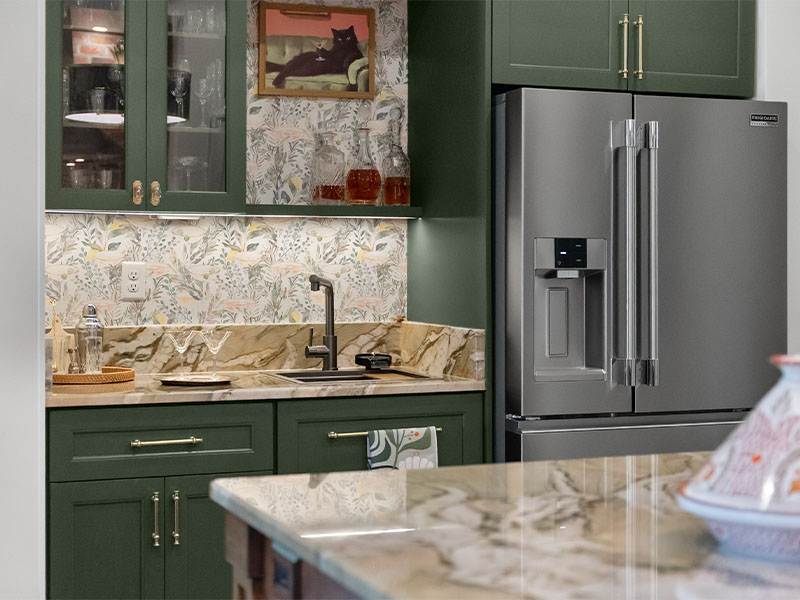
Can a Chipped Stone Countertop Be Repaired?
A small chip does not always mean the countertop needs to be replaced. In some situations, a professional may be able to fill and blend the damaged area. The final result depends on the size and location of the chip, the countertop material, and the pattern surrounding it.
A repair may be less noticeable on stone with movement, variation, or a detailed pattern. A solid or very consistent surface can make color matching more difficult because there is less visual variation to help the repaired area blend in.
Location also matters. A small chip on an edge may present a different situation than damage near a sink cutout, cooktop, seam, or unsupported overhang. These areas may experience more stress, so the surrounding countertop should be examined before the issue is treated as cosmetic.
Homeowners should avoid using a general household adhesive or an online repair kit before the damage has been evaluated. The wrong material can discolor the surface, create a raised spot, or make a future professional repair more difficult.
What About Cracks in a Countertop?
A crack requires more investigation than a minor surface chip. Although the visible line may be the first thing a homeowner notices, the cause may involve more than the countertop itself.
Cracking can sometimes be associated with impact, movement, inadequate support, stress around a cutout, or changes in the cabinetry below. A crack near the sink or cooktop should be examined carefully because these openings interrupt the continuous surface of the countertop. The surrounding support and cabinetry may need to be considered along with the stone.
Some cracks may be stabilized or repaired, but the feasibility of doing so depends on their length, depth, placement, and cause. Repairing the visible line without addressing movement or support underneath may not solve the underlying issue.
A crack that continues to change, feels uneven, or appears to pass through the full thickness of the countertop should be assessed promptly. Continuing to place weight near the damaged area could make the problem worse.
Can Stains, Scratches, and Etching Be Removed?
Surface damage does not always require replacement. Some stains may respond to treatment, depending on the material and what caused the discoloration. Natural stone is porous to varying degrees, and a substance that remains on the surface can sometimes be absorbed into the material.
The correct treatment depends on whether the mark came from oil, food, rust, hard water, or another source. Using a harsh cleaner without knowing the cause can make the damage more noticeable. Acidic products can dull certain natural stones, while abrasive cleaners may alter the finish.
Minor scratches and etched areas may sometimes be professionally refinished. The outcome depends on the material, depth of the damage, and existing finish. A polished surface must be approached differently from a honed or leathered one.
Quartz also requires material-specific care. Although quartz countertops are durable and resistant to everyday wear, they are not indestructible. High impact, direct cutting, or exposure to inappropriate products can still leave damage. Any repair method should be appropriate for the specific manufacturer and surface.
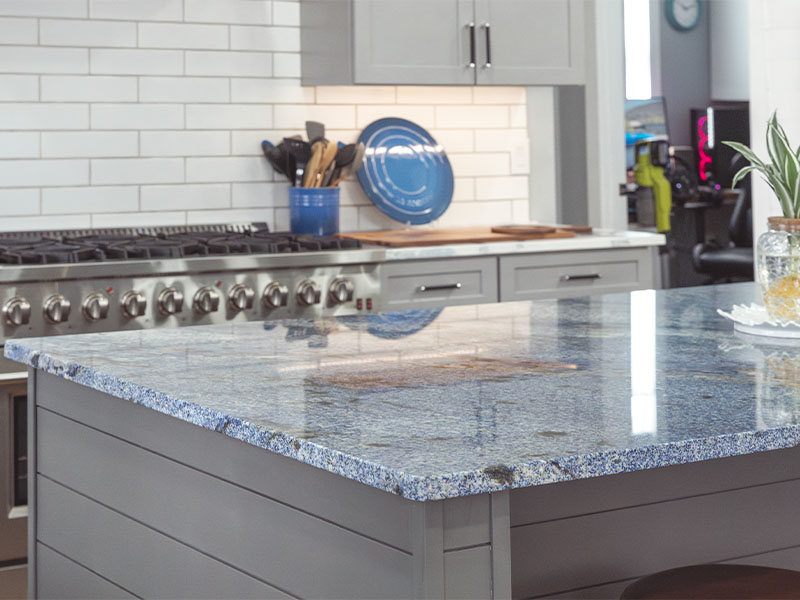
When Does Countertop Replacement Make More Sense?
Replacement may be the more practical choice when damage is extensive, structural, or connected to a larger change in the kitchen or bathroom. A long crack that continues to spread may be difficult to address reliably. Multiple damaged areas can also make individual repairs less worthwhile, especially when the surface is already showing significant wear.
The availability of a matching material can affect the decision. Natural stone varies from slab to slab, so replacing one section without changing the rest may result in visible differences in color, pattern, or movement. Even engineered materials can change between collections, production runs, and manufacturers.
Replacement may also make sense when the cabinets, sink, cooktop, or layout are being changed. If the existing countertop no longer fits the new plan, repairing a damaged area may not be the best long-term use of the homeowner’s budget.
The goal is not simply to cover the visible problem. It is to determine whether the countertop can remain safe, supported, functional, and visually consistent with the rest of the space.
Do Not Assume Damage Means the Entire Countertop Is Lost
Finding damage on a stone countertop can be discouraging, but a complete replacement is not always the only option. Small chips, isolated surface problems, and certain cosmetic concerns may be repairable. Cracks, recurring damage, and problems connected to the support below require a closer look.
The material matters, but so does the specific countertop. Granite, marble, quartzite, and quartz have different characteristics and should not be treated as though they are interchangeable. The location and cause of the damage are just as important as its appearance.
Before attempting a repair or deciding to replace the countertop, gather as much information as possible. Note when the damage appeared, whether it has changed, and whether anything struck or placed pressure on that area. Clear photographs can help begin the conversation, but an in-person evaluation may be needed to understand the full condition of the surface.
Stone Central works with homeowners throughout Summerville, Charleston, and the surrounding Lowcountry on granite, marble, quartzite, and quartz countertop projects. When replacement is the right next step, our team can help you explore materials that suit your space, your routine, and the way your home is used. Contact us or visit our Summerville showroom to begin the conversation.