

Once the stone color feels right, most homeowners want to know how it will look in their kitchen and what it will cost to have it installed. Thickness can affect both. A slimmer countertop creates a different look from one with a deeper edge, even when the color and pattern are the same. At Stone Central, we can help compare those options with the rest of the kitchen in mind.
Comparing 2 cm vs 3 cm stone countertops starts with the material you like. Available thicknesses vary by stone or product, so not every selection comes in both. From there, we can work through which options suit the project.
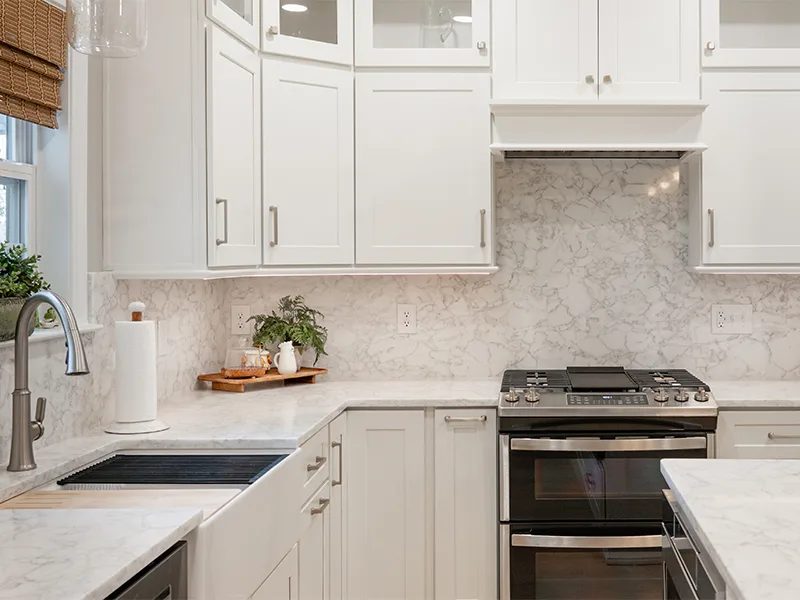
The Difference in the Finished Look
A 2 cm stone slab is about three-quarters of an inch thick, while a 3 cm slab is about an inch and a quarter. With a simple edge, 2 cm gives the countertop a slimmer appearance above the cabinets. The 3 cm option has a little more depth, making the edge more noticeable. It is a small difference in measurement, but it can change the way the countertop sits visually in the room.
A deeper edge may suit a kitchen where the island is meant to be a focal point. A slimmer edge can feel more understated, especially alongside simple cabinet doors. Neither choice needs to follow a particular decorating rule. The goal is a countertop that feels comfortable with the home, whether that means keeping the overall look quiet or giving the stone more of a presence.
A very thick countertop in an inspiration photo may have an edge made to look deeper than the slab itself. Bring the photo along, and we can discuss what is possible with the stone being considered.
Think About the Cabinets That Are Staying
When the cabinets are staying, they give us a useful starting point. Their style and proportions help determine how much countertop edge will look balanced above them. A substantial edge can work well with detailed cabinetry, but it may feel heavier than expected in another kitchen. Seeing the cabinet fronts alongside the stone makes that much easier to judge than looking at a countertop sample alone.
A photo taken from the doorway or adjoining room is helpful for that conversation. If a thicker countertop looked beautiful in a large kitchen online but feels out of place at home, a simpler edge may be all that is needed. There may be no reason to change the stone color that felt right in the first place.
The shape of the edge matters, too. A softly rounded edge and a straighter profile give the same countertop a different finish. Our article on countertop edge profiles offers a closer look at those styles.
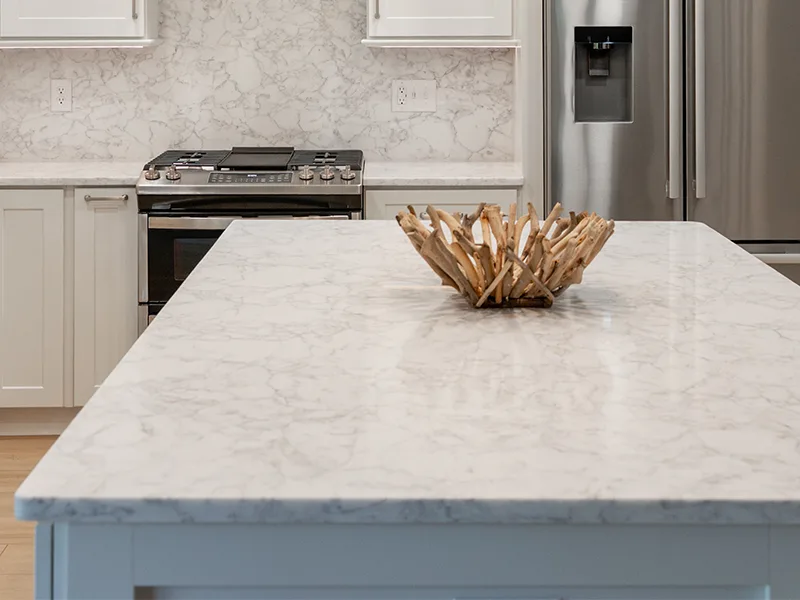
What Thickness Means for the Budget
For the same material and countertop size, a thicker slab uses more material. That can affect the price, but the thinner option is not always less expensive once the countertop is finished. An edge made to look deeper involves additional work, so a simple 3 cm edge and a built-up 2 cm edge may be different comparisons than they first appear. The useful number is the price for the completed countertop being proposed.
If the budget is getting stretched, let us know which part of the countertop matters most. It may be the stone pattern that first caught your eye, or the way the island looks from the living room. That helps us talk through where a simpler edge might still give the kitchen the look you want.
Choosing With Stone Central
Both 2 cm and 3 cm countertops need to suit the layout and be properly supported. The requirements depend on the selected material and any product-specific guidance, especially around sinks and seating overhangs. Our team can help with those project details while working through the countertop choices together.
At Stone Central, we work one on one with our customers to help the countertops feel right for their homes. Bring the cabinet photos and any ideas you have saved when you visit our Summerville showroom. Appointments are preferred, and there is no need to have every detail decided before we talk.
TO LEARN MORE:
To learn more about natural stone, or the Stone Central team, visit our website at StoneCentralSC.com